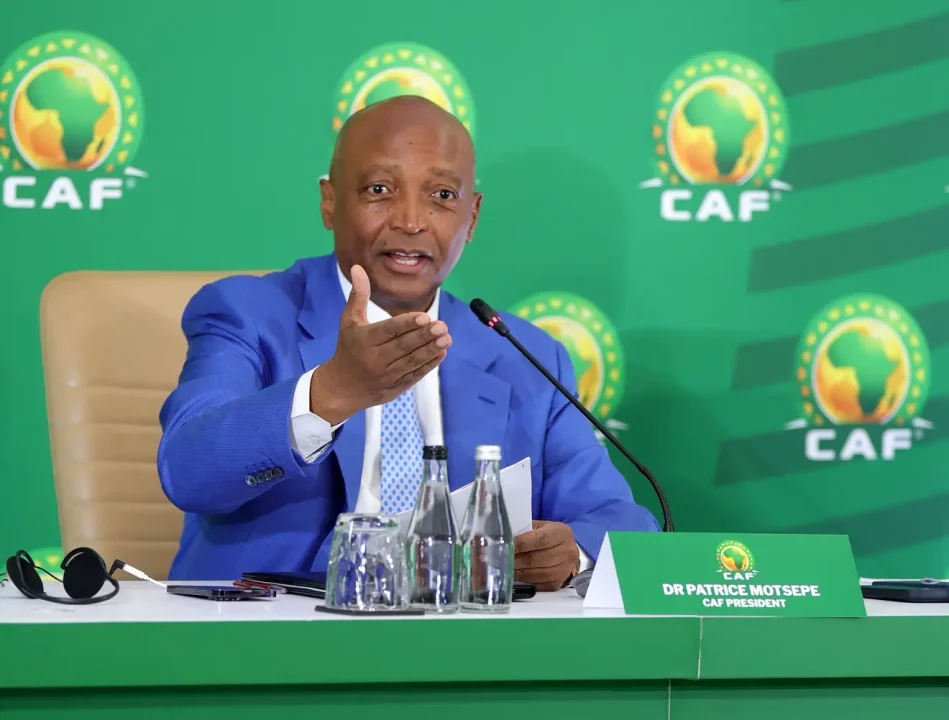
The Confederation of African Football has increased annual funding for each of its 54 member associations by 33 per cent, raising the allocation to $700,000 as part of efforts to strengthen football development across the continent.
In a post obtained from CAF media’s X handle on Wednesday, the CAF President, Dr Patrice Motsepe, announced the increase alongside a rise in annual funding for the continental body’s zonal unions to $900,000.
“Under the new funding structure, each of CAF’s 54 member associations will receive up to $700,000 annually, while the zonal unions will receive $900,000, representing a 20 per cent increase from the previous allocation of $750,000,” he said.


CAF said the increase was part of its commitment to making football across its 54 member associations world-class and financially sustainable.
The organisation described the latest adjustment as “another significant increase in CAF’s financial support for its Member Associations” under Motsepe and the CAF Executive Committee.
The new allocation marks a steady rise in the financial support provided to national football associations since Motsepe assumed leadership of the continental governing body.
In 2021, each member association received annual funding of $200,000. The amount was subsequently doubled to $400,000 before rising to $525,000 and now $700,000.
The latest increase is expected to provide national football federations with additional resources to strengthen administration, improve infrastructure and support grassroots and other football development programmes.
CAF said the initiative reflected Motsepe’s commitment to ensuring that football in each of Africa’s 54 member associations becomes “world-class and self-sustaining.”
The annual funding for zonal unions has also increased from $750,000 to $900,000, providing additional financial support for regional football bodies.
The latest adjustment forms part of CAF’s broader efforts to strengthen the financial capacity of its member associations and improve the administration and development of football across Africa.
Although the announcement confirmed the new annual allocations, it did not provide a detailed breakdown of how individual associations are expected to spend the additional funds.