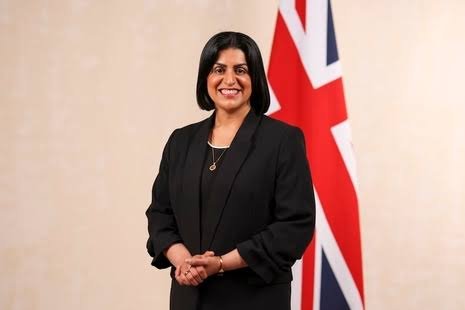
The United Kingdom has threatened to impose a complete visa ban on Eritrean nationals unless the East African country agrees to accept the return of its citizens facing deportation. Home Secretary Shabana Mahmood announced the warning on Thursday, October 15, amid a growing diplomatic dispute between London and Asmara.
Mahmood accused Eritrea of refusing to cooperate with British authorities over the repatriation of failed asylum seekers and foreign nationals convicted of criminal offences. The British government said Eritrea abruptly withdrew its cooperation earlier this year, frustrating efforts to enforce immigration decisions.
As an initial measure, the UK has withdrawn preferential visa processing arrangements for Eritrean government officials and other VIPs. Eritrean diplomats must also obtain permission from Britain’s Foreign Office before travelling more than 60 kilometres beyond London, restrictions that took effect on October 15.


Mahmood warned that tougher measures would follow if Eritrea failed to improve cooperation on deportations. She said the government was prepared to suspend visa access for Eritrean nationals and could impose similar restrictions on other countries refusing to accept the return of their citizens.
The Eritrean government rejected the accusations, describing Britain’s actions as a political gimmick. Through its embassy in London, Asmara disputed claims that it had abruptly abandoned cooperation and maintained that British authorities had failed to engage meaningfully over repatriation arrangements.
Eritrean officials also reiterated their opposition to the forced return of nationals, accusing British authorities of pursuing deportations without adequately addressing concerns about the individuals involved. The embassy challenged the effectiveness of the restrictions, saying Eritrean officials had not received UK visas since 2023.
The dispute comes as Eritreans account for a substantial proportion of migrants arriving in Britain through irregular Channel crossings. British authorities identified Eritrea as the most common nationality among small-boat arrivals during the year ending June 2026, while many Eritrean asylum seekers have received protection because of conditions in their home country.
Human rights advocates have raised concerns about forced returns to Eritrea, citing indefinite military conscription, arbitrary detention and political repression. The British government said similar visa pressure had previously secured improved deportation cooperation from Angola, Namibia and the Democratic Republic of Congo, although no deadline has been announced for Eritrea to comply.