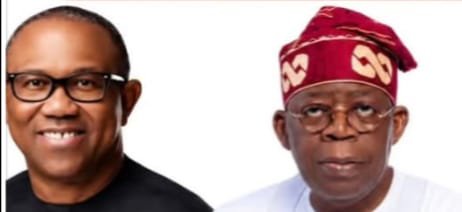
Nigeria’s presidential politics is approaching another important crossroads. The Southwest has its own political expectations of 8 years tenure following the emergence of President Bola Ahmed Tinubu in 2023. The Southeast wants an opportunity to produce the next president, while the North is equally positioning itself for the return of presidential power.
Against this background, the reported agreement between Peter Obi and Rabiu Kwankwaso, committing Obi to a selfish single four-year tenure if elected in 2027, raises a fundamental question: Should the Southeast sacrifice its age-long presidential ambition for an immediate opportunity whose political consequences could extend far beyond 2031?

There is nothing wrong with the Igbo aspiration to produce Nigeria’s president. The Southeast is an integral part of the country, and its people have contributed enormously to Nigeria’s economic, commercial, educational and professional development. They have every constitutional right to aspire to the highest political office. However, presidential power cannot be secured through primordial ethnic sentiment. It requires national acceptance and political alliances.
Nigeria’s political history offers important lessons about how regional interests can be managed. The Civil War, which ended in 1970, left deep wounds, but the federal government’s policy of “No Victor, No Vanquished”, and the Three Rs—Reconciliation, Rehabilitation and Reconstruction—provided a framework for national reintegration. Although grievances persisted, the country chose to move forward rather than permanently treat an entire population as enemies. The lesson is that historical wounds must not become permanent barriers to national cooperation.
The Southwest also experienced a major political injustice following the annulment of the June 12, 1993 presidential election. MKO Abiola, widely regarded as the winner, was denied the opportunity to assume office. His subsequent detention and death in government custody deepened the crisis. Yet the struggle for the restoration of the democratic mandate continued through protests, political mobilisation and advocacy. When democracy returned in 1999, Olusegun Obasanjo emerged as president in a development widely interpreted as part of the political accommodation required to address the June 12 crisis.
These experiences helped reinforce the importance of political accommodation in Nigeria. The PDP subsequently developed a zoning arrangement under which presidential power generally alternated between the North and South in eight-year blocks. Obasanjo served two terms before Umaru Musa Yar’Adua succeeded him in 2007. Following the eventuality of Yar’Adua’s death, Goodluck Jonathan assumed office constitutionally and later won the 2011 election. Although the rotational presidency was never entrenched in the Constitution, it became an important political understanding for managing regional interests and promoting national balance.
Another important lesson came from the formation of the All Progressives Congress in 2013. Bola Ahmed Tinubu played a major role in bringing opposition parties together to challenge the ruling PDP. The coalition eventually brought Muhammadu Buhari to power in 2015. Tinubu did not become vice president or immediately occupy the presidency. He remained politically active, maintained his influence and eventually contested the APC presidential primary in 2022, emerging as its candidate.
His political journey illustrates the value of patience, coalition-building, negotiation and long-term political investment. It shows that an ambitious political objective does not always have to be achieved at the first available opportunity. Sometimes, the wiser course is to build the relationships and political strength needed to secure a more sustainable opportunity later.
This history is relevant to the present debate. Following eight years of Buhari’s presidency, power returned to the South in 2023 through Tinubu’s election. Under the established eight-year rotational understanding, there is a political argument for allowing the South to complete its two-term opportunity before power returns to the North. This is a political convention, not a constitutional guarantee, but its importance in managing regional expectations should not be dismissed.
The Southeast must therefore examine the reported Obi-Kwankwaso agreement beyond the immediate attraction of producing a president. Kwankwaso has confirmed the existence of written agreements providing for Obi to serve only four years, after which power would return to the North. Obi has also publicly maintained his one-term position. However, the complete documents and their enforcement provisions have not been made publicly available.
The central concern is that the Southeast could be exchanging a potentially full eight-year Southern opportunity for a four-year arrangement whose future benefits are uncertain. If Obi serves one term and power returns to the North in 2031, what happens to the Southeast’s expectation of producing a president when power next returns to the South? Would the region have to wait through another 24 years before its opportunity comes around again?
There is a wider political consideration the Southeast must not ignore. The Northern political establishment is not necessarily united around the idea of an Igbo presidency. The historical relationship between sections of the Northern political establishment and the Igbo has been complicated by the 1966 military coup and the Civil War. These events left deep suspicions and political wounds. They cannot simply be erased by the formation of an electoral alliance.
The Southeast must be able to distinguish between genuine national support for its presidential aspiration and political alliances driven mainly by temporary electoral calculations. It must ask whether the proposed arrangement advances its long-term interests or merely provides another political group with an opportunity to achieve its immediate objective.
This concern becomes particularly important when considered against the political reaction to Tinubu’s reforms. His administration’s economic and institutional policies have affected established interests and generated serious opposition. Some political actors who feel threatened by these changes may see preventing his re-election as their overriding objective. They are entitled to oppose his policies and campaign for a change of government. But the Southeast must not allow its own presidential ambition to become subordinate to the calculations of political interests whose ultimate objectives may be different from its own.
The Southeast must examine what is being offered, what is being demanded in return and what the consequences may be when the immediate electoral contest is over. It should not become a convenient instrument for settling another region’s political scores.
More importantly, the Southeast must consider its relationship with the Southwest. Both regions belong to Southern Nigeria and have legitimate presidential aspirations. The Southwest has six states, while the Southeast has five. This has implications for political coalition-building and the distribution of electoral support.
If the Southeast expects the Southwest to support its presidential aspiration when the opportunity comes, it must also consider the consequences of political decisions that could undermine that relationship today. A region cannot expect lasting political solidarity from another while disregarding the latter’s legitimate political interests. Political alliances are built on reciprocity, trust and mutual respect.
The Southwest will not automatically support every future Igbo presidential candidate simply because both regions belong to Southern Nigeria. Such support must be earned through the preservation of political confidence. The same applies to the South-South and other regions. A presidential ambition that requires national support cannot be built on regional suspicion and short-term political convenience.
There is another mistake the Southeast must avoid: treating Peter Obi as its only opportunity to produce a president. Obi has established a significant political following and remains an important political figure. But no region should become so attached to one individual that it begins to believe its political future depends entirely on him.
The beautiful ones are not yet born. The children presently attending schools and universities may become mature political leaders within the next twelve years. Some may emerge with better administrative experience, broader national relationships, stronger political organisations and the leadership qualities required to govern a complex country like Nigeria. One could emerge from a political family; another could come from an entirely different background.
Why should the Southeast behave as though its presidential opportunity will disappear if Obi does not occupy Aso Rock in 2027? A region with its population, educational strength, commercial influence and human resources should be capable of producing successive generations of presidential candidates. The political future of millions of people should not be tied to the ambition or political timetable of one individual.
The responsibility of the present generation is to prepare the ground for the next. It should develop political leaders, strengthen national relationships, build credible institutions and encourage younger people to participate in national affairs. The next generation may produce candidates who are more acceptable across the federation, better prepared for national leadership and more capable of building the consensus required to govern Nigeria.
A selfish four-year presidency may offer immediate satisfaction, but it also raises the danger of sacrificing a potentially longer opportunity. The constitutional provision allows an eligible president to seek two terms. A political promise to serve only one term does not create a constitutional entitlement for another region to inherit the presidency afterwards. The Southeast must therefore be careful about exchanging a potentially full eight-year Southern opportunity for a four-year arrangement whose future benefits are not guaranteed.
Political patience is not surrender. It is strategic thinking. The Southeast can use this period to strengthen its national political influence, build relationships across geopolitical boundaries, participate more actively in party structures and develop leaders who command confidence beyond their immediate ethnic constituency.
This is not about asking the Igbo to prove their loyalty more than other Nigerians. No Nigerian should face an ethnic loyalty test before aspiring to public office. It is about recognising that national leadership requires the confidence of different sections of the country and that such confidence is built through consistent political engagement. The same standard must apply to every region.
The Southeast deserves its opportunity to produce Nigeria’s president. But it should not mortgage the political future of its children for a four-year arrangement whose long-term guarantees remain uncertain. Neither should it allow temporary political alliances to destroy relationships with regions whose support it may need when the opportunity comes.
Tinubu’s presidency will eventually end, just as every other presidency has ended. Political fortunes will change, alliances will shift and new leaders will emerge. The question is whether the decisions being made today will leave the Southeast better positioned.
The presidency is not a prize that must be seized at the first available opportunity, regardless of the price. It is a national responsibility that requires preparation, consensus and sustainable political relationships.
The Southeast must not mortgage tomorrow for the sake of today. Its presidential aspiration should be pursued with patience, political wisdom and a clear understanding that the beautiful ones are not yet born. The next generation may produce leaders even more prepared to lead Nigeria than those available today.
Idowu Ephraim Faleye is a freelance political writer based in Nigeria. +2348132100608