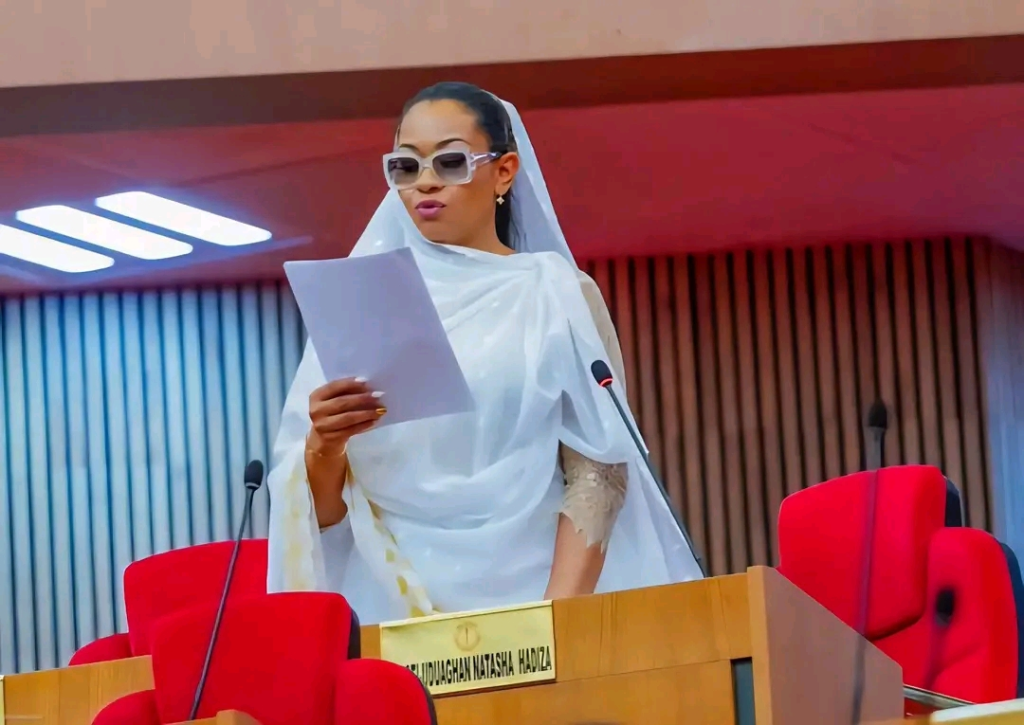
Senator Natasha Akpoti-Uduaghan has explained the source of the millions of naira distributed to her constituents during an empowerment programme in Kogi State, following calls for the Economic and Financial Crimes Commission (EFCC) to investigate the exercise.
The senator representing Kogi Central said the money came from the federal government and was provided for in the national budget.
She maintained that the distribution was part of an empowerment initiative for her constituents and insisted that the exercise was conducted openly.

Akpoti-Uduaghan also disclosed that she had not received any invitation from the EFCC over the cash distribution.
However, she said she was prepared to appear before the commission if contacted to explain how the money was obtained and disbursed.
The lawmaker made the clarification in a video circulating on social media.
She was responding to demands by the Obi-Kwankwaso Movement, which had called on the anti-graft agency to investigate the programme over allegations of possible vote-buying.
Addressing the controversy, Akpoti-Uduaghan said there was nothing to hide about the financial support given to beneficiaries.
She explained that the funds were sourced from a government budgetary provision rather than an undisclosed personal arrangement.
She said, “I have not been invited by the EFCC. But, of course, if I’m invited, I will turn up and explain the following things. Number one, the cash empowerment was money from the federal government. It’s budgeted by the Federal Government,”
The senator further disclosed that approximately 600 people attended the empowerment event, where the money was displayed before beneficiaries received their allocations.
According to her, the public nature of the exercise demonstrated that the distribution was not carried out secretly.
She maintained that the programme was intended to provide financial assistance to people within her constituency.
Akpoti-Uduaghan also questioned the decision by the Obi-Kwankwaso Movement to demand an EFCC investigation instead of encouraging its political representatives to pursue similar empowerment programmes for their constituents.
She argued that senators and other elected representatives had opportunities to attract government-supported interventions to their respective constituencies.
Rather than criticising her for providing financial assistance, she urged the group to engage its own representatives on delivering similar opportunities.
The senator said, “I don’t know how authentic you are. But if you are, you have your senators in the Senate, and they’re also able to bring these same opportunities to you.
“So, rather than using your efforts to call on EFCC to investigate why I am giving such an amount of money to my constituents, I think you should channel that energy to your senators and tell them to do the same for you.”
Her comments came after the Obi-Kwankwaso Movement called on the EFCC to investigate the cash empowerment programme, raising concerns about the circumstances surrounding the distribution of large sums of money.
The group alleged that the public sharing of millions of naira to constituents could amount to vote-buying, particularly given the political implications of financial distributions by elected officials.
In a statement released in Abuja on Wednesday, the movement’s Director-General, John Ughulu, asked the commission to examine the programme and establish whether any financial or electoral offences were committed.
The group maintained that the circumstances surrounding the exercise deserved scrutiny. It also called for appropriate legal action against anyone found to have violated the law.
Ughulu further indicated that the movement would consider political measures against Akpoti-Uduaghan’s return to the National Assembly, accusing her of undermining democratic principles through the public distribution of money.
The event was organised by the senator as part of activities marking her anniversary in the 10th National Assembly.
Images from the programme showed large quantities of cash prepared for distribution to beneficiaries.
The public display of the money subsequently triggered questions about the source of the funds, the process used to select beneficiaries and the circumstances under which the financial assistance was provided.
Under Nigeria’s electoral laws, the circumstances surrounding the distribution of money by political actors can become a matter of concern where there is evidence of an attempt to influence voters or secure electoral support through financial inducements.