
Nigeria is losing opportunities to develop a competitive maritime bunkering market despite growing domestic refining capacity, with former Director-General of the Nigerian Maritime Administration and Safety Agency (NIMASA), Barr Temisan Omatseye, questioning the country’s failure to translate local petroleum production into increased shipping-related business and revenue.
He said the presence of the Dangote Refinery and modular refineries should provide opportunities for Nigeria to strengthen its position in the supply of marine fuel to vessels, but questioned why bunkering operations were not expanding in line with the country’s refining capacity.
He spoke at a National Conference organised by the Network of Nigeria Maritime Journalists (NNMJ), with the theme, “Seaport Modernisation, Trade Facilitation and Revenue”, where he challenged industry stakeholders to investigate the factors preventing Nigeria from converting its natural resources, industrial capacity and cargo volumes into greater economic opportunities.
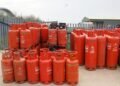

Omatseye argued that Nigeria was failing to maximise commercial opportunities across its maritime industry, warning that inadequate infrastructure planning, weak cargo evacuation systems and the inability to attract maritime services business were undermining the country’s competitiveness.
“Why are we not doing bunkering operations here when we are producing all the bunkers? Dangote is producing bunkers. We have the marginal refineries producing bunkers. Why is the bunkering operation not going on?” he asked.
The former NIMASA chief also questioned why neighbouring West African countries, particularly Togo, were attracting maritime business that Nigeria could potentially develop locally.
He urged journalists to investigate why the Port of Lomé was attracting significant cargo activity, insisting that Nigeria needed to understand the operational and policy factors responsible for the country’s declining competitiveness in regional maritime trade.
Omatseye also warned that investments in new port infrastructure could fail to deliver expected economic benefits without corresponding road and rail transportation systems to evacuate cargo to inland markets.
He specifically questioned the planning behind emerging port projects around Ibaka and Calabar, asking how cargo arriving at the facilities would reach the North-East and how solid minerals produced in the northern region would be transported to the ports for export.
“If all the cargo comes, how do we move the cargo from Ibaka to the North-East? Or how do we move the solid mineral from the North-East to Ibaka?” he asked.
He maintained that port development should be accompanied by integrated logistics infrastructure connecting seaports with industrial centres, mineral-producing locations and domestic markets.
According to him, Nigeria risks reproducing existing transportation challenges in new port locations if cargo evacuation is not incorporated into infrastructure planning from the outset.
He cited the growing traffic difficulties around the Lekki corridor, noting that congestion previously associated with Apapa was increasingly affecting movement around the new port axis.
Omatseye questioned why heavy-duty trucks should continue passing through congested urban areas when alternative routes through neighbouring Ogun State could be explored to improve access to port facilities.
He argued that relocating port activities without addressing the underlying transportation problems would merely transfer existing inefficiencies rather than resolve them.
Drawing attention to opportunities in mineral exports, Omatseye cited Guinea’s Simandou iron ore development as an example of how coordinated investments in natural resources, rail transportation and port infrastructure could attract international capital.
He referenced the $17 billion project, which involves the development of a 650-kilometre railway connecting iron ore deposits to a dedicated port.
He said Nigeria, with 53 commercially viable solid minerals, needed similar integrated infrastructure planning to connect its natural resources to domestic and international markets.
According to him, such investments could create substantial economic opportunities if government and private investors approached port, railway and industrial development as interconnected projects.
Omatseye urged maritime journalists to intensify investigative reporting into the policy and operational shortcomings limiting the country’s maritime competitiveness, arguing that the media must do more than reproduce statements from government agencies and industry operators.
He called for constructive criticism backed by research and practical recommendations, stressing that journalists should investigate international best practices and hold relevant authorities accountable for decisions affecting the sector.
He also urged maritime journalists to collaborate with reporters covering road transportation and railway development, noting that the movement of cargo did not end at the seaport.
“We cannot allow our maritime industry to die,” he said, maintaining that Nigeria had the cargo, expertise and resources required to compete more effectively in the global maritime industry.