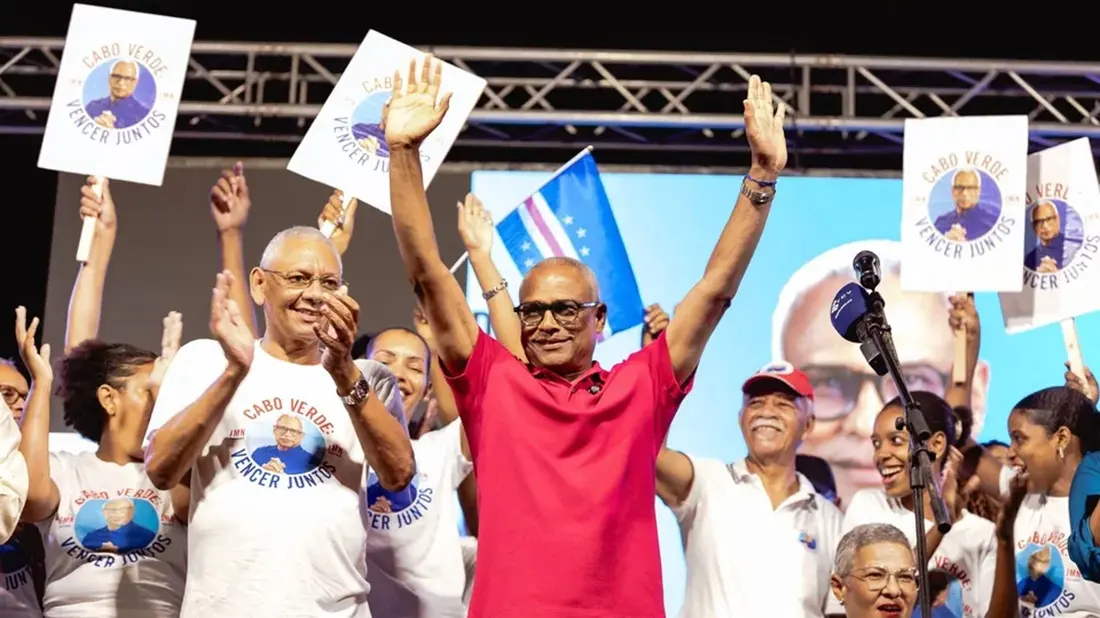
Cabo Verde President José Maria Neves has secured a second five-year term after winning 63.8 per cent of the vote in Sunday’s presidential election, according to provisional results.
Results from 97 percent of polling stations, announced on state-owned television, showed Neves crossing the 50 percent threshold required to avoid a runoff.
“It was indeed a great victory. We won close to 64 percent, which is an excellent result in this presidential election,” Neves said, speaking at a press conference broadcast live by national television broadcaster TCV.


His main challenger, former Justice Minister Joana Rosa, came second with 31.6 per cent, while the four other candidates each secured less than one per cent of the votes.
Rosa, who made history as the first woman to contest the presidency in the archipelago, conceded defeat and said she had congratulated Neves.
The elecCabo Verdetion campaign focused largely on job creation for young people, amid concerns over the number of Cabo Verdeans leaving the country in search of employment abroad.
Located more than 600 kilometres off the west coast of mainland Africa, Cabo Verde has a population of about 500,000, although a larger number of its citizens live overseas, particularly in the United States and Portugal.The former Portuguese colony is regarded as one of Africa’s most stable democracies but continues to face challenges linked to youth unemployment and emigration.
Neves, 66, served as prime minister for 15 years before becoming president in 2021. He belongs to the centre-left African Party for the Independence of Cabo Verde (PAICV), the country’s oldest political party.
Rosa contested the election under the platform of the centre-right Movement for Democracy, which governed the country for 10 years before a legislative election in May.
Cabo Verde operates a hybrid presidential-parliamentary system in which the prime minister leads the government, while the president retains significant constitutional powers, including the authority to veto legislation.