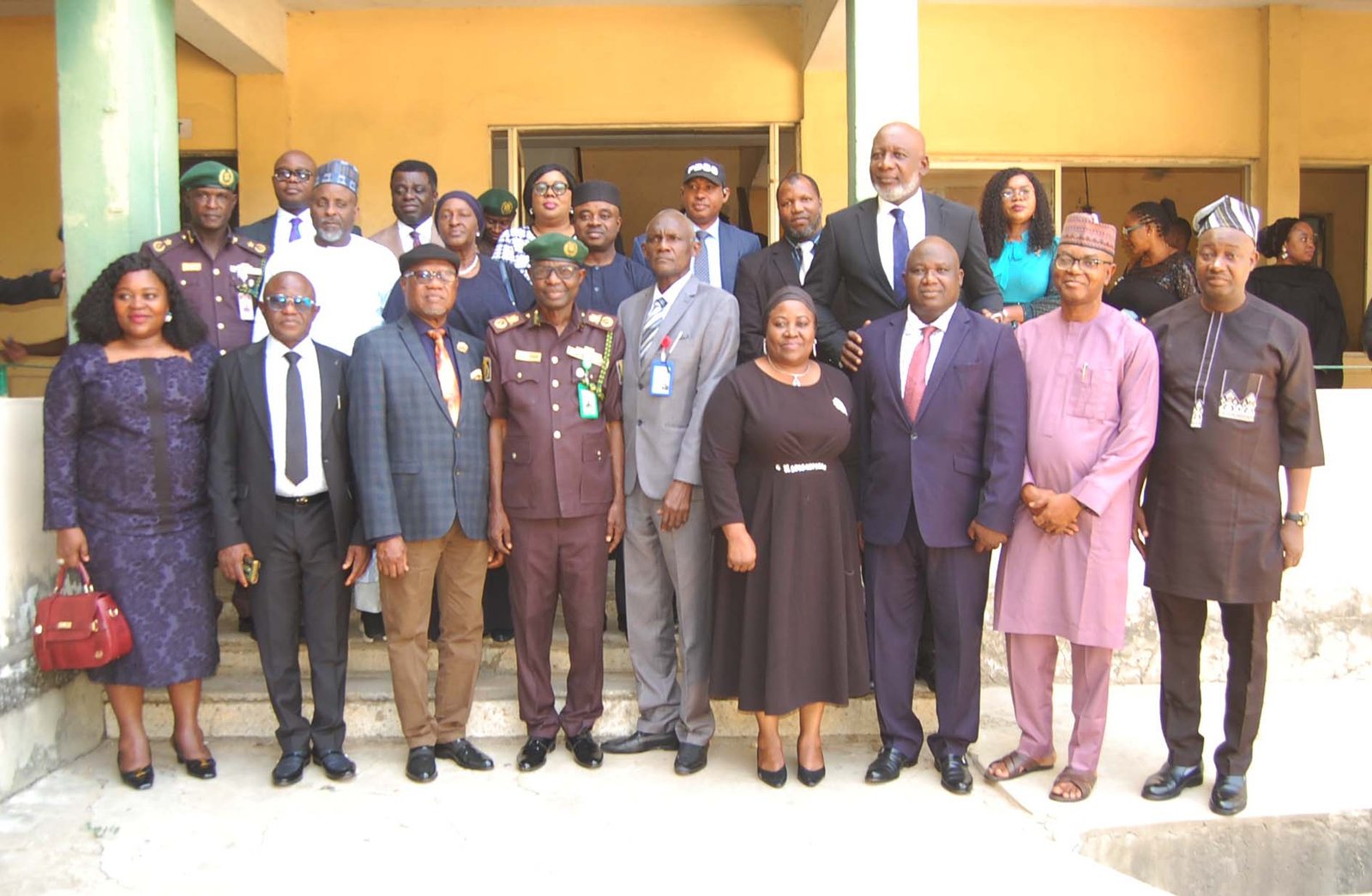
Legal Aid Council of Nigeria has facilitated the release of over 2,560 inmates in Kano State through legal interventions, case reviews and resolution of cases.
The Chairman, Governing Board of the Council, Justice Sulyman Durosinlorun-Kawu (Rtd), disclosed this during a visit to the Nigerian Correctional Service (NCoS), Kano State Command.
This is contained in a statement issued by the Command’s Public Relations Officer, CSC Musbahu Kofar-Nassarawa, on Thursday in Kano.


Durosinlorun-Kawu, who led the delegation alongside the Director-General of the Council, Mr Aliyu Bagudu-Abubakar, said the achievement underscored the importance of legal aid services.
He emphasised the importance of legal aid services in ensuring access to justice, particularly for people who could not afford legal representation.
He expressed appreciation for the reception accorded to the delegation and emphasised the need to strengthen collaboration between the two institutions.
Responding, the Controller of Corrections, Kano State Command, Mr Ahmed Yusuf-Lakpene, reaffirmed the Service commitment to strengthening collaboration with the Council to promote access to justice and protect the legal rights of inmates in custodial centres across the state.
Yusuf-Lakpene described the NCoS and the Legal Aid Council as strategic partners in the administration of criminal justice.
He said the partnership was vital to promoting speedy access to justice, particularly for inmates who had remained in custody without trial or formal charges.
He added that the collaboration would also help address congestion in custodial centres through timely legal interventions, case reviews and improved access to legal representation.
Yusuf-Lakpene reiterated the Service commitment to working with the Council and other stakeholders to promote justice, decongest custodial centres and enhance humane custody and reformation.
The statement said the delegation also visited the Maximum Security Custodial Centre, Janguza, and the Medium Security Custodial Centre, Goron Dutse, where they assessed the facilities and interacted with officials on inmates’ access to legal services.