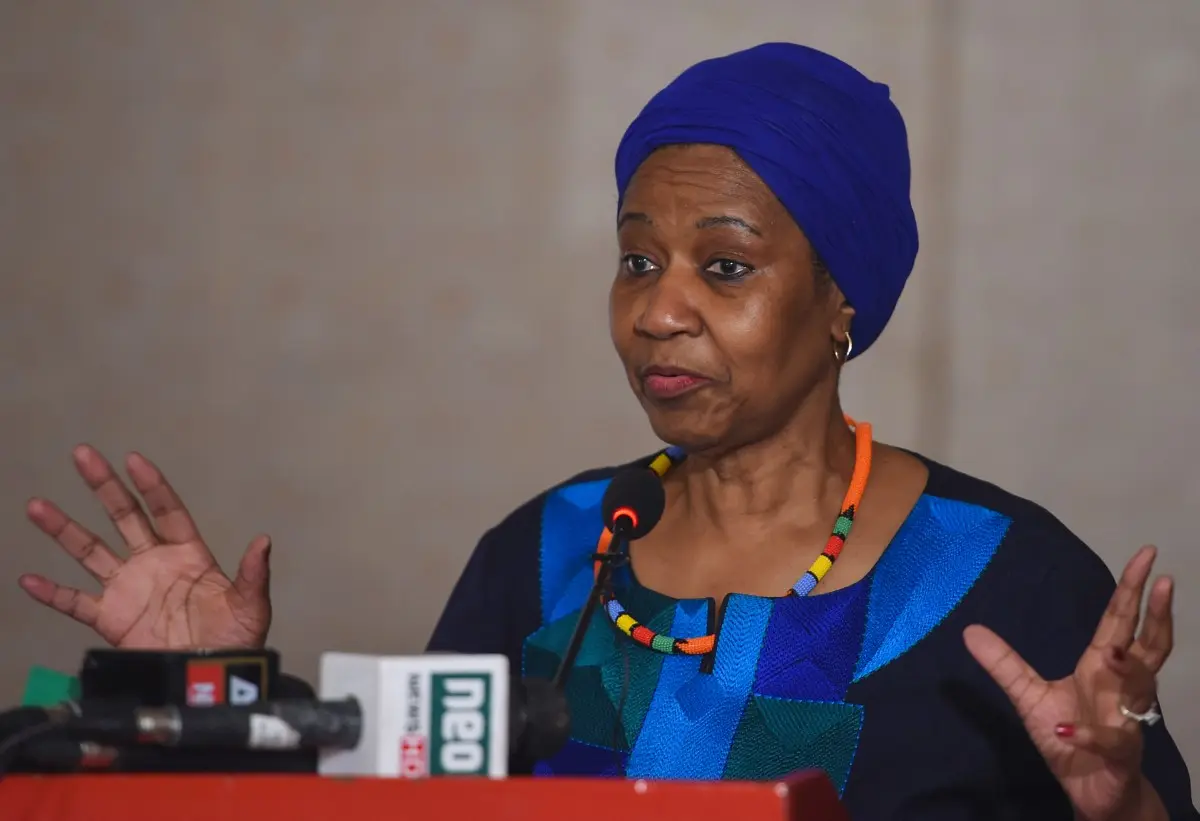
Tributes have poured in for South Africa’s former deputy president and former UN Women executive director, Phumzile Mlambo-Ngcuka, who died at 71.
Mlambo-Ngcuka died on Friday following complications from a medical procedure she underwent approximately two weeks earlier, according to a family statement reported by South African state broadcaster SABC.
A prominent political figure and advocate for gender equality, Mlambo-Ngcuka made history in 2005 when she became South Africa’s first female deputy president, serving until 2008. She previously served as Minister of Minerals and Energy.


Her influence extended beyond South Africa when she became United Nations Under-Secretary-General and executive director of UN Women in 2013, a position she held until 2021.
South African President Cyril Ramaphosa expressed profound sadness over her death, describing her as a remarkable leader whose contributions extended across the world.
“Our hearts are really, really sad and broken for having lost such a very dynamic woman leader in our country,” Ramaphosa said.
“She truly flew the flag of women, not only women of South Africa and Africa, but women of the world,” he added.
United Nations Secretary-General Antonio Guterres also paid tribute to Mlambo-Ngcuka, describing her as a “lifelong champion of the rights & empowerment of women & girls”.
He said she firmly believed that gender equality was not a privilege granted to women but a fundamental right they deserved to claim.
UN Deputy Secretary-General Amina Mohammed recalled Mlambo-Ngcuka’s advocacy for women and girls in conflict-affected countries, including Afghanistan, the Democratic Republic of Congo and Nigeria.
“She pushed the limits and I think that that’s where we got a lot of the confidence to do the things that we do, following in her footsteps,” Mohammed told SABC.
Mohammed also said Mlambo-Ngcuka remained committed to advancing women’s leadership until her death, including advocating for a woman to succeed Guterres when his second term concludes on December 31.
Mlambo-Ngcuka leaves behind a legacy of political leadership, international diplomacy and decades of advocacy for women’s rights and representation in positions of power.