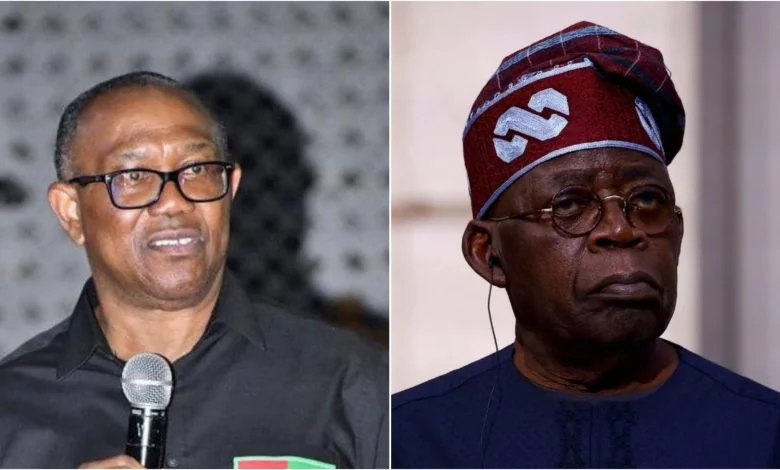
The All Progressives Congress (APC) Presidential Campaign Council has urged Nigerians to disregard purported mock election results circulating online which claim that Peter Obi won more than five million votes in Saturday’s exercise conducted by the Independent National Electoral Commission (INEC).
This was just as the council described the figures published by the Nigeria Election Intelligence System (NEIS) as fictitious, fraudulent and intended to mislead the public.
In a statement issued on Sunday, the APC Presidential Campaign Council spokesperson, Dele Alake, questioned the authority of NEIS to publish purported election results, insisting that INEC did not announce any winner or collate results from the mock exercise.

INEC conducted the mock accreditation and election exercise on Saturday across two polling units in each ward nationwide, covering 17,618 polling units out of the country’s 176,846 polling units.
Alake noted that the exercise tested the commission’s Bimodal Voter Accreditation System (BVAS), while the ballot papers featured pseudo options such as “AQUA”, “BLUE”, “COAL”, “CYAN” and “GOLD”, rather than political parties or candidates.
He questioned how NEIS generated figures for political parties, including the APC, Nigeria Democratic Congress (NDC) and African Democratic Congress (ADC), when none of them featured on the ballot papers.
“In a surprising turn, the Nigeria Election Intelligence System (NEIS), a pro-National Democratic Congress (NDC) and pro-Peter Obi organisation, published figures purportedly from INEC claiming that Peter Obi led the mock poll with more than five million votes.”
The APC spokesperson also queried how the organisation allegedly generated more than 17 million votes from an exercise that covered only about 10 per cent of polling units nationwide.
“The figures are totally the imagination of NEIS, fraudulent and meant to mislead the public.”
He argued that INEC neither collated nor announced results at polling unit, ward, local government, state or national levels after the exercise, questioning the source of NEIS’s purported figures.
Alake further accused the organisation of presenting a simulation as though it were an actual election result, despite describing the process on its website as a simulation.
He said the publication appeared to be an online political stunt aimed at generating attention, engagement and traffic rather than providing a credible assessment of the country’s political mood.
The APC campaign council urged Nigerians not to interpret the figures as an indication of the likely outcome of the 2027 general elections, adding that celebrations over the purported results should not be mistaken for evidence of nationwide electoral support.
Alake also reiterated the party’s earlier warnings about alleged attempts by opposition elements to manipulate public opinion through fake news and AI-generated images, discredit the electoral process and undermine INEC.
Meanwhile, INEC has also disowned the purported results, warning Nigerians against sharing figures being circulated by neis.ng, which it said was neither affiliated with nor authorised by the commission.
In a statement on Sunday, signed by Adedayo Oketola, Chief Press Secretary and Media Adviser to the INEC Chairman, the commission said the website was publishing false and misleading figures allegedly claiming that a presidential candidate was leading in the mock exercise.
INEC stressed that Saturday’s exercise did not feature real political parties or candidates, explaining that pseudo names were used on dummy ballot papers solely for testing purposes.
The commission said the mock poll was designed to test its technology, electoral processes and logistics, not to generate results for candidates or political parties.
It described any claim that a candidate or party won, led or trailed in the exercise as baseless, warning that platforms presenting such figures as mock election results were deceiving the public.
INEC urged Nigerians, political parties, candidates and the media to disregard and refrain from sharing the purported figures, adding that it was reviewing the matter and reserved the right to take appropriate action against those responsible for spreading false election information.
The commission said verified information would continue to be disseminated through its official website and verified social media handles.