

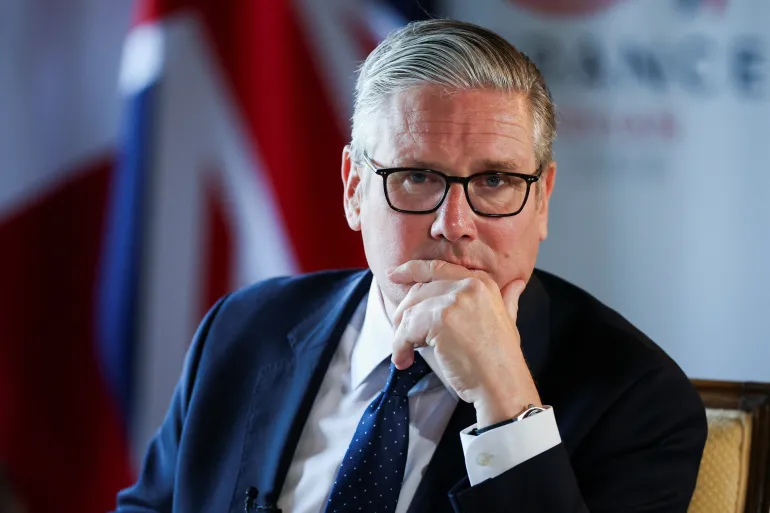
British Prime Minister Keir Starmer has announced his decision to leave office after weeks of political pressure, declining public support and internal challenges within the Labour Party.
Starmer confirmed on Monday that he would step aside as the country’s leader. He said he had already informed King Charles about his decision and would continue serving as prime minister until Labour completes the process of choosing a new leader.

He explained that the replacement process would be completed no later than September. During his announcement, Starmer became emotional as he thanked his wife, Victoria, and his children.
His resignation makes him the sixth UK prime minister to leave office within the last 10 years, reflecting a period of political instability in the country.
The pressure on Starmer increased after weeks of criticism from members of his party. The situation became more difficult after Andy Burnham, the mayor of Greater Manchester, returned to Parliament following a local election victory, raising speculation that he could challenge Starmer for the Labour leadership.
While Starmer had earlier insisted he would resist any attempt to remove him, support for his leadership weakened as some Labour figures began discussing possible changes at the top.
Starmer’s popularity dropped sharply after Labour’s major election victory in July 2024. Analysts suggested that the win was helped by dissatisfaction with the previous Conservative government rather than strong public support for Starmer personally.
Since taking power, his government has faced criticism over economic problems, slow growth and changes to important policies involving taxes, benefits and workers’ rights.
Labour members have also become concerned about the growing influence of the Reform Party led by Nigel Farage, which has been gaining attention ahead of the next general election.
Burnham, who is seen as a possible successor, is a long-time Labour politician from northern England. He previously served as an MP for 16 years and contested Labour leadership elections twice before leaving national politics.
He later became mayor of Greater Manchester, where he managed responsibilities covering transport, housing and skills. Burnham gained national recognition during the COVID-19 pandemic for challenging former Prime Minister Boris Johnson’s lockdown decisions.
After winning a parliamentary election on June 18, Burnham returned to Westminster and is now widely expected to consider a leadership challenge.
The former mayor has argued that the country needs a new direction but has not yet revealed detailed plans for tackling major issues such as the economy, living costs, foreign relations and national security.
Whoever replaces Starmer will face many of the same challenges, including economic difficulties and high borrowing costs.
Under the announced timetable, nominations for the Labour leadership contest will open on July 9 and conclude before the summer break.
If one candidate gains overwhelming support within the party, a full leadership contest may not happen. In that situation, the chosen candidate could become Labour leader and automatically take over as prime minister.
However, if several candidates enter the race, Labour members will hold a leadership contest. Possible contenders include former Health Secretary Wes Streeting and former Deputy Prime Minister Angela Rayner.
The change in leadership could also affect Britain’s relationship with the United States. Starmer and US President Donald Trump initially maintained a positive relationship, but tensions increased over issues including Iran and Britain’s foreign policy decisions.
Trump recently criticised Starmer, saying in a Truth Social post: “He failed badly on two very important subjects – IMMIGRATION AND ENERGY.”
If Burnham becomes prime minister, he would need to maintain strong ties with Washington while also managing concerns in Britain about being too close to the US administration.




