Defence Headquarters yesterday said it would not react to the development since the case is still in court.
Director of Defence Information, DDI, Major General Samaila Uba, said reacting will amount to subjudice.
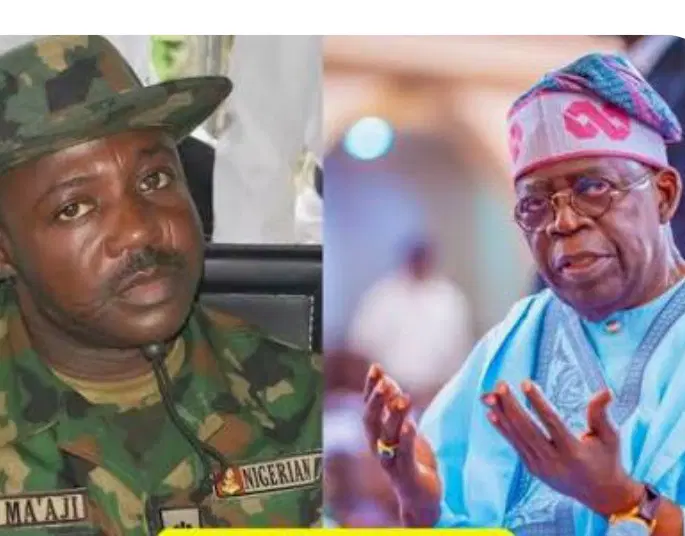
Colonel Ma’aji said his actions were driven by patriotism and frustration over what he described as worsening conditions in the country.
While apologising for his involvement in the alleged plot and appealing to the authorities for leniency, he insisted that his motive was not personal ambition but a desire for a better Nigeria.
He said the plan emerged from concerns among some military personnel over poor governance, insecurity, inadequate welfare and declining living standards.
According to him, the situation had become so troubling that he feared the country was heading towards collapse.
Ma’aji said, “What has happened has a very long history, and it is driven by patriotism and I love the job and country.
“Every time I look at how I’m struggling to raise five children with my meagre salary, I get worried. Looking at every aspect of life in Nigeria, there is no hope for the common man, and we are left to defend ourselves.
“This has nothing to do with any ambition or personal goals. It is purely out of the desire for a prosperous country that works for everyone.”
He alleged that military personnel were particularly affected by inadequate welfare, citing the condition of soldiers wounded in combat and the challenges facing serving personnel and their families.
The colonel said the movement was still at a stage of mobilisation and discussions when security authorities intervened, adding that no specific date had been agreed for any action.
He also denied that there were foreign collaborators, while explaining that various individuals became involved at different stages of the discussions.
Ma’aji said some of those approached expressed concerns about the state of the country, while others withdrew or failed to provide the resources they had initially promised.
He further said the alleged plot was fuelled by what he described as frustrations over his failure to secure promotion to the rank of brigadier-general on two occasions.
According to him, some of his colleagues had encouraged him to revive the movement after the second setback.
The colonel, who said the initial planning started during the administration of Muhammadu Buhari, however, said his experience, following his arrest, had changed his perspective and made him realise that there were alternative ways of expressing concerns within the military.
“If God willing, the authority is kind enough to pardon us, we will never contemplate this course of action again in the future,” he said.
Ma’aji called for the establishment of a formal channel through which military personnel could communicate their concerns directly to the Chief of Army Staff without fear of victimization.
He also recommended improved remuneration and welfare packages for members of the Armed Forces, including better healthcare, housing, pension and family support.
The colonel called for an improvement in the military’s casualty management system, saying the treatment of wounded soldiers could affect the morale of personnel still serving in operational areas.
He also criticised what he described as godfatherism and perceived inequality in military postings and career progression, arguing that some officers had spent years on operations while others had little or no operational exposure.
On the wider Nigerian society, Ma’aji expressed concern over the cost of living, education, corruption, and the impact of fuel subsidy removal on ordinary citizens.
He urged government to invest resources saved from subsidy reforms in programmes capable of reducing hardship, including mass transportation and other social infrastructure.
He equally called for stronger action against corruption, saying perceived impunity among public officials could affect the morale and confidence of security personnel.
On the alleged coup plot itself, Ma’aji said the movement was never intended to destabilise the country, insisting that it was motivated by what he described as love for Nigeria.
He said, “Everything we planned was borne out of patriotism, love of country, and the desire to have a prosperous Nigeria that we all can be proud of.”
The colonel appealed to the authorities to consider the circumstances that led to the alleged plot and pardon those involved, describing them as first offenders.
“We are pleading for a pardon and a chance to amend our ways. Many of the officers have participated in some operations in the North-East. I am happy nobody has been hurt,” he said.
Approach to expressing grievances
Ma’aji said his detention had been “challenging and revealing”, adding that it had given him an opportunity to reconsider his approach to expressing grievances.
He maintained that he and others involved had no other country to call their own and urged the authorities to consider their contributions to national security alongside the allegations against them.
He stated further: ‘’To prevent a recurrence of incidents such as this, I would advise the authority as follows
‘’Poor remuneration: The salary of Nigerian Armed Forces personnel is too low, considering the current economic realities and inflation.
‘’Welfare: For instance, we are an army at war; our handling of casualties is paramount to how the rest working will be willing to continue and lay their lives for the country. There is also a need for robust welfare packages for all the members of the Armed Forces. There is also a need for serving personnel’s family welfare packages to be introduced. The COAS Loan Programme should be expanded and sustained.
‘’The AF NHIS package needs to be reviewed to include more critical health challenges rather than just malaria and typhoid. There is a need for a sustainable housing programme for the armed forces rather than isolated and disjointed packages.
‘’The issue of the Obasanjo car loan scheme needs to come back. I think the AFN needs a whole department dedicated to personnel welfare. I could elaborate on this if given the opportunity.
‘’Godfatherism: A system where you can hardly get anything without someone calling in on your behalf. There are officers who have been eight, nine years straight on operations. While we still have some officers who haven’t been to the North-East and will never be there.
’Pension upgrade: Col Adamu told me that his pension cannot buy his BP drugs. I feel sad when I saw CDS ordering ex-servicemen to be dispersed from their protest ground for improved pensions. We should remember that we shall all retire. Our ex-servicemen deserve better treatment. Charity begins at home; that is why I am starting from the armed forces.
‘’Removal of fuel subsidy: The government should have phased the removal and not the sudden removal, and the policy is anti-human. The primary purpose of government, as provided by the Constitution, is the welfare and security of the people… we have rather created more stealing avenues because governors now have more funds to steal.
‘’An average Nigerian is not asking for too much, just a bare minimum of being able to move from point A to B and also afford three square meals, good health, and the education of their children. The federal government should invest the subsidy money in a practical project that can reduce human suffering. The issue of urban mass transit that started during the military regime should be revisited.
‘’Corruption: This must be given clear and serious attention because it is the mother of all crimes. Our education is in shambles. Those of us here in Abuja, how much do we pay for school fees, and how many officers/soldiers can afford school fees with their salaries?
‘’Budget padding: After padding a budget and awarding costs, they’re still not implemented. For example, you put one thousand naira for a bottle of water that costs 100 naira and still do not buy the water.
’These are people who got almost everything free, including education when growing up, but there is no free education anywhere today in Nigeria. They all turned their backs against the country. As a service personnel, how much of salary can you save that would buy you a house to live in ?
‘’Is it after using all your youthful years that you will start looking for money to survive after retirement?
‘’Some officers have served for over 15 years, and even a plot of land. The policy of car loans was swept under the carpet. What happened to all these policies? An average officer or soldier is barely surviving, despite the huge sacrifices they are making on a daily basis to keep the country safe and secured. He concluded by asking for an opportunity to meet with the relevant authorities, apologise and commit themselves to pursuing lawful and peaceful means of addressing grievances.
Credit: VANGUARD NEWS