Efforts to prevent vision loss must be matched by greater support for people already living with visual impairment, including access to healthcare, employment and education, a Nigerian health advocate said.
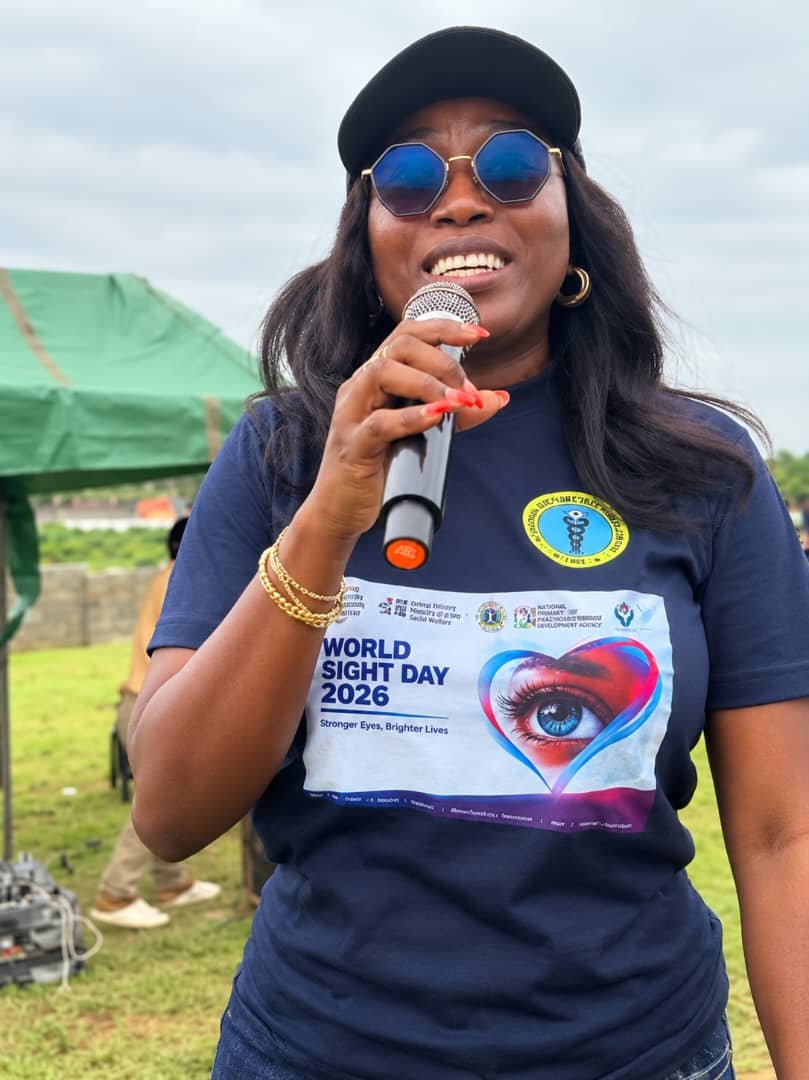
Dr. Kiema Ogunlana, programme director of Daisy Oak Foundation, made the call during a World Sight Day outreach in Ruga community along Airport Road in Abuja, where underserved residents received free eye examinations and other healthcare services.

“While we are investing in preventing vision loss, there should also be investment in those who are already visually impaired to ensure that they are not denied access to health, employment and other social opportunities,” Ogunlana said.
She cited World Health Organization estimates that about 2.2 billion people globally have near or distance vision impairment, noting that many cases could be prevented or addressed.
“We need to be conscious about our eye health. This is why this kind of intervention, especially in communities that are very hard to reach, is very important to us,” she said.
The foundation and its partner organisations provided free eye examinations, eyeglasses, eye-health education, general health education, deworming medication and other healthcare services during the outreach.
Ogunlana said the intervention was intended to raise awareness about eye health and ensure that people in underserved communities were not excluded because of their location or economic circumstances.
“We have ensured that they understand the importance of taking care of their health, especially their eyes. Because behind those statistics are real people,” she said.
This year’s World Sight Day theme, “Every Story Counts”, highlights the experiences of people affected by vision problems and the need to make eye care more accessible, she said.
Okechukwu Chibueze, programme officer at Sam Empowerment Foundation (SEF), said the theme reflected the different backgrounds and experiences that shape people’s eye-health journeys.
“In line with the theme, ‘Every Story Counts,’ we know that each person comes from a diverse background which defines their story and their sight history. Beyond this, we are here to unveil to them possibilities beyond what they see,” Chibueze said.
“There are two ways to see. One is mental and the second is visual,” he added.
Chibueze said partnerships among organisations could expand the reach of interventions in underserved communities.
“We believe in partnership in line with SDG Goal 17, as combining each organization’s strengths upholds humanity,” he said.
Dr. Njezi Chinedu, chairman of the Nigerian Optometric Association, FCT Chapter, said the theme emphasised the human consequences of vision impairment.
“In choosing the theme, we considered the statistics, knowing that behind the statistics are human beings,” Chinedu said.
He said an estimated 4.2 million Nigerians were at risk of blindness, adding that vision impairment could affect people’s ability to work, attend school and support their families.
“Behind this statistic is a father who, because of his visual impairment, cannot function at work and therefore cannot give his best. He is at risk of losing his job and putting his family on the poverty line,” Chinedu said.
He said children unable to attend school because of vision problems could also struggle to reach their full potential.
“Behind the statistics of children who are out of school because they cannot see is a child who might never reach his potential because his vision is impaired,” he said.
Chinedu urged government agencies and non-governmental organisations to expand access to affordable eye care, particularly in communities with limited healthcare services.
“We are all calling on government and non-government organisations to take affordable eye care to places that are unreached,” he said.
He also advised Nigerians to seek treatment from qualified eye-care professionals rather than rely on unverified remedies.
“I advise Nigerians to always seek professional care. The era of going under the bridge to put whatever concoction into the eyes is over,” Chinedu said, warning that unregulated remedies could cause further damage to the eyes.