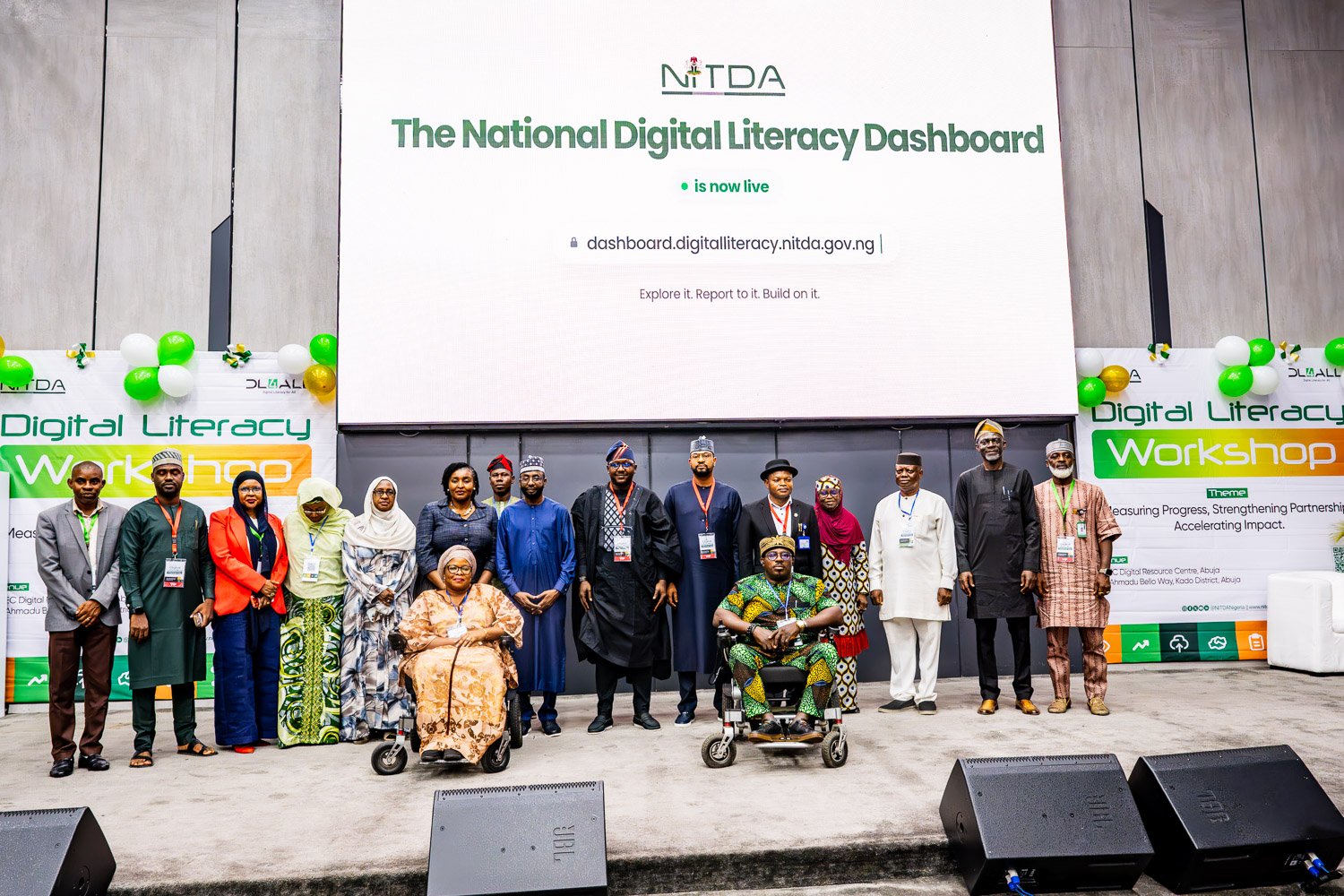
The Federal Government has launched a National Digital Literacy Dashboard to track interventions, identify gaps and measure progress towards achieving 70 per cent digital literacy by 2027 and 95 per cent by 2030.
Mallam Kashifu Inuwa, Director-General of the National Information Technology Development Agency (NITDA), unveiled the dashboard at the National Digital Literacy for All (DL4ALL) workshop in Abuja.
The workshop had the theme “Measuring Progress, Strengthening Partnerships, Accelerating Impact”.


Inuwa said the dashboard would provide a common platform for government agencies, technology companies, educational institutions, development partners and civil society organisations to report their digital literacy interventions.
“The initiative will help address duplication of efforts, identify gaps in service delivery, and ensure that resources reach communities where digital skills training is most needed.
“Our ambition is to achieve 95 per cent digital literacy by 2030. But ambition without measurement is not enough,” he said.
According to him, the dashboard’s latest data showed that 248 organisations had reported approximately 2.76 million training achievements since January 2022, with interventions recorded across the 36 states and the FCT and all 774 local government areas.
He, however, said women accounted for only 32.9 per cent of recorded participation, highlighting the need to make digital literacy programmes more inclusive.
Inuwa stressed that digital literacy was about improving people’s livelihoods and productivity, rather than simply teaching them how to operate digital devices.
“Nigeria’s greatest resource is our human capital. Our future prosperity will depend on how effectively we develop their capabilities and create opportunities for them to contribute,” he said.
He added that the success of the programme should be measured by how beneficiaries applied their skills to improve their businesses, work and daily lives.
“The measure of success is not the number of trained people but the number of empowered people,” he said.
Mr Oladejo Olawunmi, Director, Digital Development Services Department, said the dashboard would strengthen accountability by bringing previously fragmented interventions into a common reporting framework.
He said stakeholders needed to move beyond counting trainees to assessing the competencies they acquired and how they applied them in everyday life.
Lailah Sanusi, Research Lead at Digitalcore Nigeria Ltd., said the dashboard showed that about 75 per cent of recorded beneficiaries were below 35 years, while women accounted for approximately 32 per cent.
She said available records showed that digital literacy training beneficiaries had increased from about 707,000 in 2022 to 2.7 million as at Oct. 16, 2026.
Sanusi said the reported interventions had reached communities across the country, adding that the data would help stakeholders identify areas requiring further investment.
The DL4ALL initiative, launched in 2024, aims to expand digital skills development across formal education, the workforce and the informal sector.