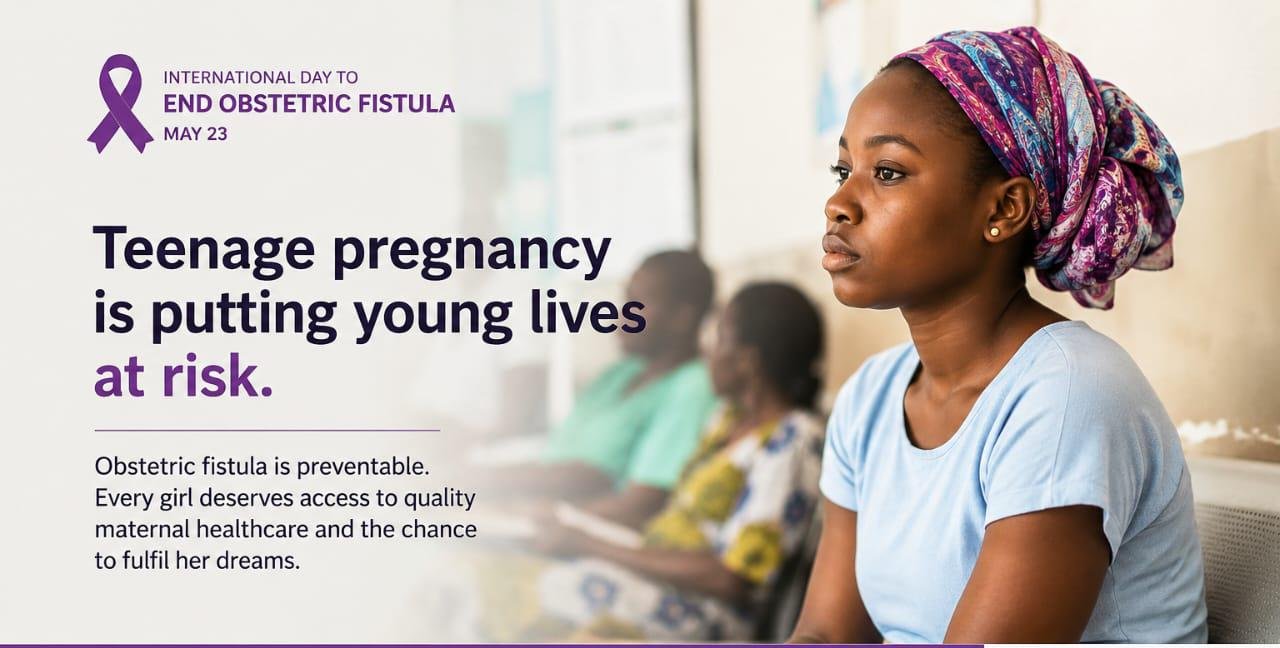
Health advocates warn that Nigeria’s high teenage pregnancy rate is driving a surge in obstetric fistula, fueled by poor maternal healthcare and critical delays in emergency treatment.
The warning came from Nigerian non-governmental organisation Gem Hub Initiative as the world marked the International Day to End Obstetric Fistula.
Obstetric fistula is a severe childbirth injury caused mainly by prolonged obstructed labour without timely medical intervention, particularly emergency caesarean section services. The condition can leave women unable to control urine or faeces and often exposes survivors to stigma, abandonment and emotional trauma.


“Nigeria still records a high rate of teenage pregnancy, one of the underlying factors of obstetric fistula,” the organisation’s executive director, Oyeyemi Pitan, said in a statement.
“Our work in communities shows that far more needs to be done,” she added.
The organisation said many survivors also lose their babies during labour and are later left to face rejection, shame and social isolation.
Experts have identified teenage pregnancy, child marriage, poverty and poor access to maternal healthcare as major drivers of obstetric fistula in Nigeria.
Recent findings from a 2026 study by Johns Hopkins University estimated that about 457,000 women aged 15 to 64 were living with obstetric fistula globally in 2020, although advocates say Nigeria remains among the countries with a heavy burden of the condition.
Gem Hub Initiative called for stronger investment in adolescent health programmes, improved maternal healthcare systems and quicker access to emergency obstetric care to help eliminate fistula by 2030.