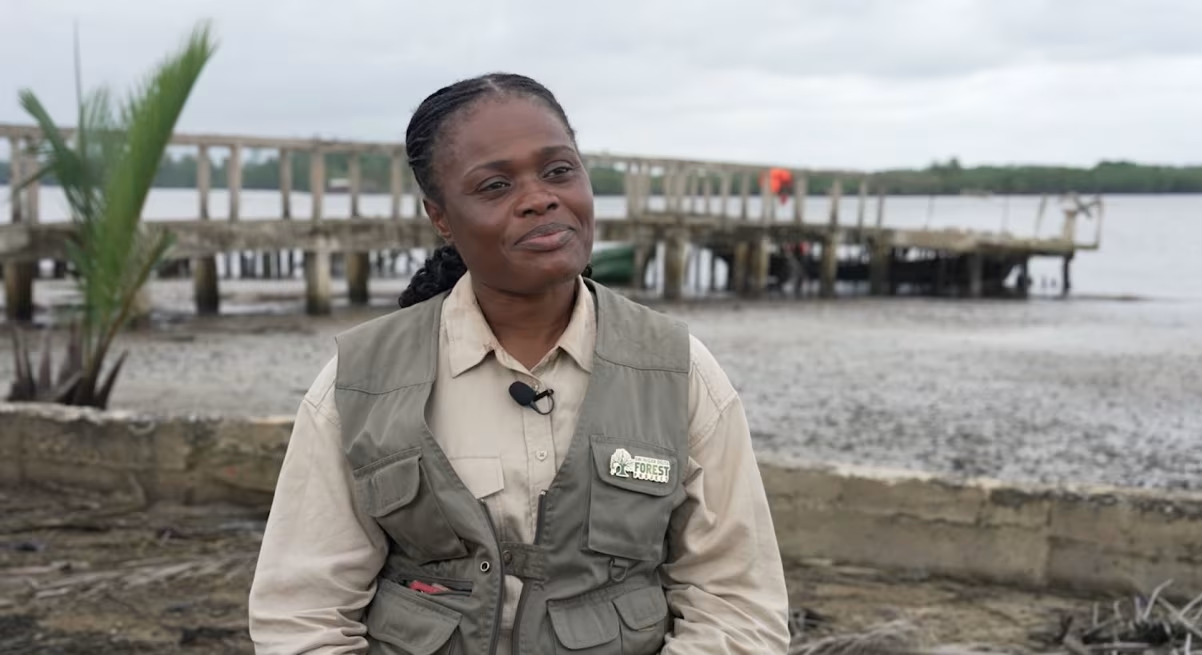
In a piece as part of Call to Earth, CNN’s Zain Asher reports on Nigerian conservationist Rachel Ikemeh who is working with communities across the Niger Delta to rebuild, restore, and repair degraded landscapes and seascapes. The community-led approach has led to the creation of Nigeria’s first locally managed Marine Protected Area.
Ikemeh is the founder of the South-West/Niger Delta Forest Project (SWNDFP). She talks about the importance of the Delta area: “The Niger Delta in itself is the second largest swamp forest in Africa and the third largest contiguous mangrove forest in the world. I’m on a mission to preserve the last remaining significant wildlife populations left in Nigeria.”
The community-led conservation programme was launched by Ikemeh to encourage locals to protect the areas around them. She teaches about conservation, the animals’ needs, and data collection. By 2021 she had successfully set up a conservation area covering 2,500 acres of surrounding forest, policed and protected by the local Apoi community. She tells CNN, “When you want something to be sustainable, you want it to be stewarded by the people who live closest to it and by the people who need it for their livelihood. They’ve seen the exploitation, and now they want a different future.”


As the years passed, SWNDFP’s scope would grow far beyond the Apoi Creek Forest, now protecting more than 20,000 acres of forest and at least 16 threatened species.
Earlier this year, Ikemeh, a 2026 Rolex Awards Laureate, took her mission a step further by establishing Nigeria’s first locally managed marine area in Foropa Middleton Kingdom. Located in the heart of the Niger Delta, its shores have drastically changed over recent decades. Sharks, dolphins, sea turtles, and schools of fish used to be a common sight but have dwindled. Oil spills, caused by aging equipment, militant sabotage, and illegal artisanal refining have turned the delta into one of the most severely polluted environments on Earth.
Chef Josaih Uson, former chairman of the Chiefs’ Council of Foropa Middleton Kingdom, explains the community’s participation: “We’re preserving the protected area by actively preventing hunters and fishermen from coming,” he said, adding that they’re redirecting these activities toward nonprotected areas and also prohibiting fishermen from using tools that would damage the reefs, such as dynamite, as well as educating them against mangrove logging. SWNDFP estimates it has supported the livelihoods of almost 14,000 people in the region.
Looking to the future, Ikemeh says conservation will be the main priority for SWNDFP, “Conserving this landscape and the seascape should be number one, because that’s what’s most important to ensure the peace and security that is required for people to thrive in this region. So, until the environmental conservation of this region is addressed, every other thing will just be addressing the symptoms of what’s going on here.”
See more from Call to Earth: