By Joseph Omotayo,
If you are in Nigeria, you know what it means and where it pinches to pay house rent yearly. You hustle every month, only to hand over your money to a landlord at the end of the year, and still maintain the property on top of it like it’s yours. However, no matter how long you are a tenant there, you don’t own the property. If you miss a payment, your eviction notice is already waiting for you.


Now, look hard at what is happening in Nigeria’s solar market today. That exact landlord-tenant relationship has quietly taken over the solar energy business.
The national grid keeps failing, and Band A tariffs holding above N200 per kilowatt hour make it expensive to keep the lights on. Petrol prices are no better, and running a generator daily has become impossible for tailoring shops, barbers and cold room operators. To survive, Nigerians have spent billions of naira on importing millions of solar panels alone to beat the energy crisis.
Seeing how desperate people are for light, several foreign-backed solar companies stepped in with what sounded like an easy solution: solar subscription. They tell you: “Don’t worry too much about buying expensive solar materials, just pay a small monthly fee and enjoy 24/7 power.”
That sounds like a relief, doesn’t it? But beyond the fine print is a smart trap. It keeps Nigerians paying for power forever while corporate investors collect the returns.
The Maths Does Not Favour You
Solar companies advertise these rental plans as a gift to low-earners and traders who cannot afford to buy panels, inverters, and lithium batteries upfront.
When you rent a solar system, you are not paying to own anything. You are simply paying for permission to use someone else’s equipment.
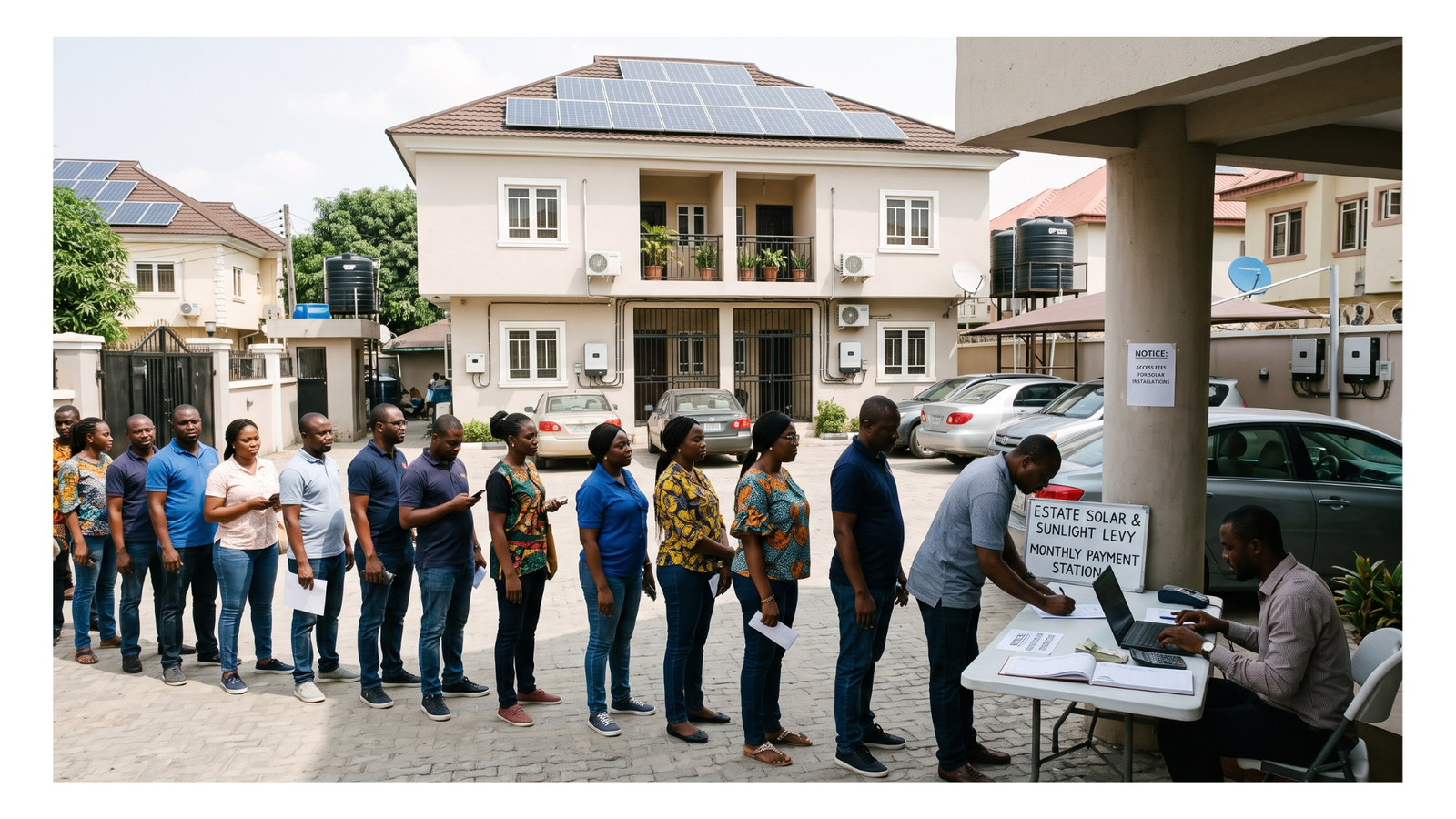
Take a POS agent running a shop in Lagos, Ibadan or Port Harcourt, for instance. Under a subscription plan, they pay a fixed amount every month. By the third or fourth year, the total they have paid the company already exceeds the cost of a sizeable setup of their own. Yet, when that contract ends, the user loses the equipment. If business drops for a period and they miss payment, the company remotely cuts power off the inverter.
And just like that, your shop goes dark, all the money you’ve paid over the years notwithstanding, and you are back where you started, begging NEPA to bring light.
Foreign Investors Are the Real Winners
To understand why these subscription companies push this model so hard, you have to follow where the investment actually comes from.
Foreign investors favour subscription models because they deliver continuous monthly returns. They buy the equipment, install it on your home or shop and sit back while you work yourself dry to pay their monthly fees.
When a tailor owns their sewing machine, their daily running costs go down, and their business grows. But when your source of income is locked under an endless subscription model, that is not building a business but working hard to pay off another person’s investment.
Instead of solving our energy problems, solar rentals have simply replaced the old NEPA bill with a private corporate bill.
True Energy Freedom Means Ownership
Nigerians do not need new energy landlords. What we need are real pathways to ownership and power independence.
If solar companies truly want to help Nigerians, they should offer rent-to-own plans. With a proper rent-to-own system, every kobo you pay brings you closer to full ownership, and once you finish your payment, the system becomes yours. From that day on, your electricity cost drops to almost zero, and your business enjoys the relief.
Sunlight is free. God gave that to everyone. The solar panels and batteries that feed off that sunlight should eventually belong to the people using them, not an investor abroad.
As upright citizens and journalists, we must start asking the right questions. We shouldn’t bargain to pay rent on the sun we have for free. We should demand real ownership so our hard work gives us, our businesses, and children the future they deserve. We shouldn’t be paying for someone’s continuous profit.
*************************************************
Disclaimer: The writer is Joseph Omotayo, Head of the Human Interest and Diaspora Desk at Legit.ng. He has been writing on solar technology for more than four years. Views expressed here are the writer’s own and do not necessarily reflect the official policy or position of Legit.ng or any other organisation.